The Hidden Art of Machu Picchu: A Journey Beyond the Stones
You know what I didn’t expect at Machu Picchu? It wasn’t just ancient ruins—it was art. Every carved stone, every window framing the Andes, felt intentional, almost alive. I went for the views, but stayed for the culture. This is more than a lost city; it’s a masterpiece of Inca vision, spirituality, and craftsmanship. What I discovered changed how I see travel—and art—forever.
First Sight: The Emotional Impact of Arriving at Machu Picchu
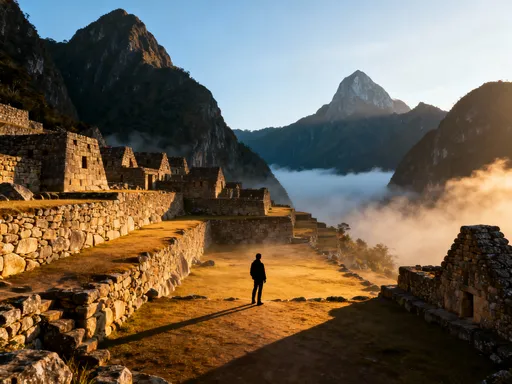
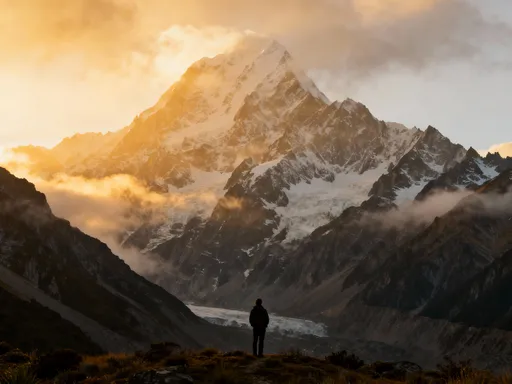
The first time you lay eyes on Machu Picchu, time slows. Whether you arrive after four days hiking the Inca Trail, your boots dusty and muscles aching, or by a smooth train ride from Cusco followed by a winding bus ascent, the moment of revelation is nearly identical—a breathless pause as the morning mist parts over terraced hillsides and ancient stone emerges from the clouds. For many, the sight is not just impressive but deeply emotional. There’s a quiet awe that settles in, not from sheer size, but from the harmony of the place—the way the ruins seem to grow naturally from the mountain, as if the earth itself shaped them.
This emotional impact is no accident. The Incas designed Machu Picchu to inspire reverence. The layout unfolds gradually, revealing temples, plazas, and agricultural terraces in deliberate sequence. You do not see everything at once. Instead, each turn offers a new composition—stone against sky, shadow against light—carefully framed by doorways and windows that act like picture frames for the natural world. The placement of structures guides movement and sightlines, creating a journey that feels both physical and spiritual. Even today, with thousands of visitors each year, there are still quiet corners where one can stand alone, listening to the wind pass through carved niches, and feel the weight of centuries of intention.
What strikes most visitors is how the site balances grandeur with intimacy. The scale is impressive—over 150 buildings spread across 5 square miles—but the proportions of rooms, corridors, and staircases feel human, not overwhelming. The precision of construction, the soft curves of walls, the way sunlight filters through trapezoidal windows—all suggest a deep understanding of aesthetics. This was not merely a fortress, a retreat, or an administrative center. It was a carefully composed experience, a place where architecture, nature, and emotion were woven together into something greater than the sum of its parts. In this sense, Machu Picchu is not just preserved history; it is a living canvas of Inca artistic philosophy.
The Inca Aesthetic: Understanding the Art in Architecture
To understand the artistry of Machu Picchu, one must look beyond the ruins as archaeological artifacts and see them as expressions of a sophisticated aesthetic. The Inca did not separate function from beauty. For them, a well-built wall was not only strong but sacred. A precisely aligned doorway was not only practical but symbolic. Every architectural choice reflected a worldview in which order, balance, and connection to nature were central values. The trapezoidal shape of doors and windows, for instance, is often noted for its structural advantages—resisting earthquakes and distributing weight—but it also carries visual rhythm. Repeated across the site, these shapes create a sense of unity, like a musical motif returning in different variations.
The curves of certain walls, particularly in ceremonial buildings, are another example of deliberate design. Unlike the rigid right angles common in modern construction, Inca masons shaped stone to flow with the landscape. These organic forms echo the surrounding mountains and rivers, reinforcing the idea that the city was not imposed on nature but born from it. The Temple of the Sun, built on a rounded outcrop of bedrock, follows the curve of the stone beneath it, blending geometry with geology. Its semi-circular wall, once topped with a conical roof, aligns with the winter solstice sunrise, allowing light to enter only at a specific moment each year. This fusion of astronomy, architecture, and ritual reveals a culture that saw beauty in precision and meaning in alignment.
Equally significant is the Intihuatana stone, often called the “hitching post of the sun.” Carved from a single block of granite, this carved pillar was used to mark the solstices and equinoxes, helping priests track the agricultural calendar. But its form is not merely utilitarian. Its polished surfaces catch the light in changing ways throughout the day, and its position offers panoramic views of the surrounding peaks, many of which were considered sacred. The placement and craftsmanship suggest that the Intihuatana was not just an instrument but a monument—an object of reverence, designed to be seen, touched, and experienced. In this way, Inca architecture was not just built to last; it was built to communicate, to inspire, and to connect people to the cosmos.
Stonework as Sacred Language: The Craftsmanship That Defies Time
Perhaps the most astonishing aspect of Machu Picchu is its stonework. The way stones fit together so precisely that not even a knife blade can slip between them has amazed engineers, archaeologists, and travelers for over a century. This technique, known as ashlar masonry, was achieved without mortar, using only stone tools, water, and sand for shaping. Each block was carefully shaped to interlock with its neighbors, creating walls that could shift slightly during earthquakes and then settle back into place—a remarkable feat of seismic resilience. But beyond engineering, this craftsmanship speaks of a deeper cultural value: the belief that work, when done with care and intention, becomes sacred.
Imagine the labor involved. Stones were quarried from nearby hills, some weighing several tons, then dragged by rope and human power up steep slopes. Teams of stonemasons spent years shaping, fitting, and adjusting each piece. There were no written plans, no blueprints—only knowledge passed down through generations, guided by memory, observation, and spiritual belief. The result is a kind of language written in stone. The angles, the curves, the way certain stones are shaped to resemble animals or mountains—all suggest that the walls themselves tell stories. A jaguar-shaped stone here, a condor silhouette there—these are not random. They are expressions of myth, cosmology, and identity, embedded in the very fabric of the city.
This level of detail reflects a worldview in which beauty and function were inseparable. A well-fitted wall was not only durable but honorable. A smoothly polished surface was not just pleasing to the eye but a sign of respect—for the material, for the gods, for future generations. The Incas believed that the natural world was imbued with spirit, and their buildings were a way of honoring that belief. Every chisel mark, every aligned joint, was an act of devotion. Today, standing before these walls, one can still feel that presence—not in a mystical sense, but in the quiet certainty that something profound was created here, not just for utility, but for meaning.
Nature as Canvas: How Landscape Shapes Cultural Expression
Machu Picchu was never meant to stand apart from nature. On the contrary, it was designed as an extension of it. The site sits in a dramatic saddle between two towering peaks, Huayna Picchu and Machu Picchu Mountain, surrounded by the Urubamba River, which loops around the base like a protective moat. This was no random choice. The Incas selected locations based on spiritual significance as much as practicality. Mountains were seen as deities, rivers as life-giving forces, and the land itself as a living entity. Machu Picchu was not built on the landscape; it was woven into it, like a thread in a larger tapestry.
The concept of *huaca*—a sacred place or object—helps explain this deep connection. For the Inca, a huaca could be a rock formation, a spring, a cave, or even a distant peak. These were not just landmarks but spiritual anchors, points of communication with the divine. At Machu Picchu, many structures align with such huacas. The Temple of the Three Windows, for example, frames a view of the distant snow-capped peak of Salcantay, one of the most revered mountains in the region. The Intihuatana stone aligns with the sunrise on the winter solstice, linking the site to the movement of the sun. Even the agricultural terraces, often seen as purely functional, follow the contours of the land in a way that mimics natural erosion patterns, blending human work with the earth’s own design.
This integration extends to the visual experience. From almost any vantage point within the ruins, the eye is drawn outward—to a mountain, a river bend, a cloud drifting over a ridge. Windows and doorways are positioned to frame these views like paintings. The Incas did not seek to dominate the landscape; they sought to harmonize with it. This philosophy is evident in the way buildings follow the terrain, rising and falling with the slope, rather than flattening it. The result is a site that feels organic, as if it grew from the mountain rather than being placed upon it. For the modern traveler, this offers a powerful lesson: that beauty is not always about control, but about listening—about shaping human creation to the rhythms of the natural world.
Modern Encounters: Experiencing Culture Beyond Tourism
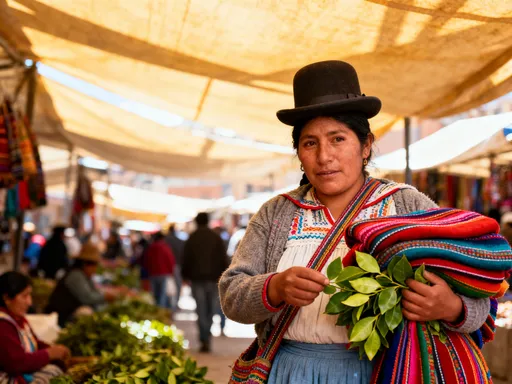
While Machu Picchu itself is a monument of the past, the culture that created it is very much alive. In the town of Aguas Calientes, at the base of the mountain, and along the Inca Trail, travelers encounter Quechua-speaking communities whose ancestors lived in this region long before the arrival of the Spanish. Their presence reminds us that this is not just a historical site, but a living cultural landscape. Women in colorful embroidered dresses carry woven bags, men tend small farms on steep slopes, and children learn songs passed down through generations. These are not performances for tourists; they are everyday expressions of identity, resilience, and continuity.
One of the most moving cultural experiences is witnessing traditional weaving. Using backstrap looms, artisans create intricate patterns that carry symbolic meanings—mountains, rivers, animals, stars—echoing the same themes found in Inca stonework. Each design is a story, a memory, a connection to ancestors. Some families open their homes to visitors through community tourism programs, offering meals, guided walks, and conversations in simple Spanish or Quechua. These interactions are not always easy—language barriers exist, and the pressures of tourism can strain local resources—but they offer a rare opportunity to move beyond the postcard image and see the living roots of Inca heritage.
Respectful engagement begins with awareness. Buying handmade crafts directly from artisans, rather than mass-produced souvenirs, supports local economies and preserves traditions. Choosing guided tours led by local historians or community members ensures that the narrative of Machu Picchu is told from within, not imposed from outside. Participating in cultural festivals, when invited, offers a glimpse into spiritual practices that have endured for centuries. The key is to approach these encounters with humility, not as a spectator, but as a guest. In doing so, travelers do more than learn about culture—they become part of its preservation.
Preserving the Masterpiece: Challenges of Conservation and Respect
Today, Machu Picchu faces growing threats from the very attention that sustains it. Overcrowding is a major concern. With more than 1.5 million visitors annually, the site endures wear and tear that its creators never anticipated. Foot traffic erodes stone pathways, unregulated photography damages fragile surfaces, and litter, though minimized by strict rules, still poses risks. Erosion from heavy rains, exacerbated by climate change, threatens the stability of terraces and foundations. In 2010, flooding from the Urubamba River forced the temporary closure of the site, a stark reminder of its vulnerability.
Peru, in partnership with UNESCO, has taken significant steps to protect Machu Picchu. Visitor numbers are now capped daily, with timed entry tickets required. Certain areas, like the summit of Huayna Picchu, are limited to a few hundred climbers per day. Plastic bottles, large bags, and tripods are prohibited. Guides must be licensed, ensuring that visitors receive accurate information. These measures reflect a growing recognition that preservation is not optional—it is essential. But enforcement depends on traveler cooperation. Every person who steps onto the site plays a role in its future.
Sustainable tourism is not just about rules; it is about mindset. Walking mindfully, staying on marked paths, speaking quietly, and refraining from touching ancient walls are small acts with lasting impact. Choosing eco-friendly accommodations, supporting local businesses, and traveling in shoulder seasons help distribute economic benefits more evenly. Most importantly, approaching Machu Picchu not as a photo opportunity but as a sacred space fosters the kind of respect that preservation requires. This is not just a monument to be seen, but a legacy to be honored. The responsibility does not rest with Peru alone—it belongs to every visitor who has the privilege of standing among its stones.
Why This Journey Matters: Reimagining Travel Through Art and Meaning
Traveling to Machu Picchu changes you—not because it checks a box on a bucket list, but because it invites a deeper way of seeing. It teaches that beauty is not accidental, that craftsmanship can carry meaning, and that human creativity is at its most powerful when it listens to the earth. In a world where speed and convenience often dominate, Machu Picchu stands as a quiet counterpoint—a reminder that some things are worth building slowly, with care, and for generations to come.
This journey matters because it redefines what travel can be. It is not just about moving from place to place, but about opening oneself to history, culture, and the quiet wisdom of those who came before. Machu Picchu shows us that art is not confined to museums. It lives in the curve of a wall, the alignment of a temple, the pattern of a woven cloth. It is not separate from life, but woven into it. When we travel with this awareness, we do not just see destinations—we begin to understand them.
So let this be an invitation—not just to visit Machu Picchu, but to seek out places where art and culture are still alive, where beauty is intentional, and where the past speaks to the present. Travel not to collect experiences, but to connect with meaning. Move slowly. Listen closely. Look deeply. And when you stand before ancient stones touched by centuries of wind and rain, remember: you are not just a visitor. You are a witness to a masterpiece—one that asks not only to be seen, but to be felt, remembered, and protected.