You Won’t Believe Kuwait City’s Architectural Secrets
Kuwait City isn’t just a desert capital—it’s a visual story of tradition meeting bold modernity. I never expected to be stunned by its skyline, where Islamic motifs blend with futuristic curves. From soaring towers to cultural landmarks, every structure tells a piece of Kuwait’s identity. This is architecture that doesn’t just rise from the sand—it speaks. If you think the Gulf is all glass and steel, wait until you see what’s hiding in plain sight.
First Impressions: A Skyline Like No Other
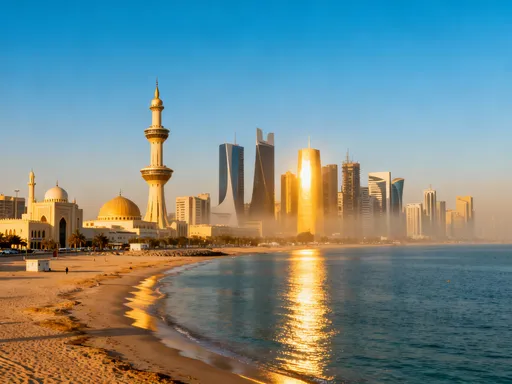
Arriving in Kuwait City by air or along the Sheikh Jaber Al-Ahmad Highway, the first sight of the skyline evokes a sense of awe. The city rises dramatically from the flat desert landscape, its silhouette framed by the shimmering waters of the Arabian Gulf. Unlike other Gulf capitals that favor uniformity in height and style, Kuwait City’s skyline is a dynamic composition of contrasts—low-rise traditional neighborhoods sit beside clusters of gleaming high-rises, each with its own architectural personality. The Kuwait Towers, standing proudly on a promontory overlooking the sea, are the city’s most iconic feature. Composed of three interconnected spheres supported by slender concrete legs, they serve as both water reservoirs and a symbol of national pride. Completed in 1976, they were among the first major architectural statements of modern Kuwait and remain a testament to the country’s ambition during its early post-independence era.
Equally striking is the Al Hamra Tower, the tallest building in Kuwait and one of the most recognizable in the region. Soaring to 412 meters, its curved, sail-like form is both aerodynamic and symbolic—designed to reduce wind load while evoking the maritime heritage of the Gulf. The tower’s façade, clad in reflective glass and aluminum, shimmers under the desert sun, creating a visual dialogue between light, heat, and form. What makes this skyline remarkable is not just its verticality but its intentionality. The city’s layout follows a radial plan centered on the old souq and coastal corniche, allowing for both expansion and continuity. New developments like the Kuwait Financial Centre (KFAS) and the upcoming Silk City project reflect a long-term vision for sustainable urban growth, balancing density with public space and environmental considerations.
The coastline itself plays a crucial role in shaping the city’s architectural character. The Corniche, a 13-kilometer seaside promenade, offers panoramic views of the skyline and serves as a social spine for residents. Here, families gather at dusk, children play near fountains, and couples stroll under shaded walkways—all framed by a backdrop of illuminated towers. This integration of public life with architectural grandeur is rare in rapidly developing cities, where aesthetics often overshadow accessibility. In Kuwait City, the skyline is not a distant spectacle but a lived environment, accessible and meaningful to those who call it home.
The Soul of Tradition: Islamic Design in Modern Structures
At first glance, Kuwait City’s architecture may appear dominated by international styles, but a closer look reveals a deep-rooted commitment to Islamic design principles. Architects in Kuwait are not merely decorating buildings with traditional motifs—they are reinterpreting centuries-old forms to meet contemporary needs. One of the most profound examples is the Grand Mosque, also known as the Sheikh Jaber Al-Ahmad Cultural Centre, which opened in 2021 as one of the largest mosques in the Middle East. With a capacity of over 13,000 worshippers, the mosque is a masterpiece of modern Islamic architecture. Its four minarets, each 75 meters tall, echo the proportions of classical Ottoman designs, while the central dome—measuring 30 meters in diameter—features intricate geometric patterns inspired by Islamic art.
Inside, the prayer hall is bathed in natural light filtered through stained-glass windows depicting floral and calligraphic motifs. The use of light is deliberate, symbolizing divine presence and spiritual clarity. The mosque’s courtyard is paved with white marble and surrounded by arcades adorned with mashrabiya screens—lattice panels that provide shade and privacy while allowing airflow. These screens, once common in traditional Kuwaiti homes, have been reimagined in steel and glass, blending heritage with innovation. The building’s orientation follows the qibla, aligning precisely with Mecca, and its acoustics are engineered to carry the imam’s voice without amplification—a nod to both faith and function.
This fusion of tradition and modernity extends beyond religious buildings. The National Assembly building, designed by Danish architect Jørn Utzon (creator of the Sydney Opera House), incorporates wind towers and shaded courtyards reminiscent of pre-oil-era architecture. Even commercial developments like The Avenues Mall integrate Islamic patterns into floor tiles, ceiling designs, and façade elements. These choices are not merely aesthetic—they reflect a cultural imperative to preserve identity in an age of globalization. For Kuwaiti families, especially women who often manage household aesthetics and cultural education, seeing these values embedded in public architecture reinforces a sense of belonging and continuity.
Engineering Marvels: When Ambition Meets the Desert
Building in Kuwait is not for the faint of heart. With summer temperatures regularly exceeding 50°C (122°F) and frequent sandstorms, architects must design structures that withstand extreme environmental conditions. The challenge is not just about comfort—it’s about survival. Materials degrade quickly under intense UV exposure, steel expands in heat, and sand infiltrates mechanical systems. To combat these forces, Kuwait’s architects employ advanced engineering solutions that are as practical as they are innovative. One of the most critical strategies is the use of high-performance façades. Buildings like the Al Hamra Tower feature double-glazed, low-emissivity glass that reflects solar radiation while minimizing heat transfer. The tower’s curved shape also reduces wind pressure, a crucial consideration in a region prone to seasonal gusts.
Another key innovation is passive cooling. Traditional Kuwaiti architecture relied on thick walls, narrow streets, and wind towers to create natural ventilation. Modern interpretations of these techniques are visible in government buildings and cultural centers, where overhangs, shaded courtyards, and strategically placed openings channel breezes and reduce reliance on air conditioning. The Sheikh Abdullah Al-Salem Cultural Centre, for example, uses a series of interconnected pavilions arranged around open-air plazas, allowing for cross-ventilation and thermal regulation. These design choices significantly lower energy consumption, aligning with Kuwait’s growing focus on sustainability.
Structural resilience is equally important. Foundations in Kuwait must account for soft soil and high salinity, requiring deep piling and corrosion-resistant materials. The Kuwait Towers, for instance, were built with reinforced concrete and coated with special sealants to protect against seawater erosion. Inside, advanced water purification and storage systems ensure that the towers fulfill their dual role as both landmarks and functional infrastructure. These engineering feats are rarely visible to the casual observer, yet they are the backbone of the city’s architectural success. For families concerned with safety and long-term stability—especially mothers managing household environments—knowing that buildings are designed to endure extreme conditions provides peace of mind.
Cultural Hubs That Shape the City’s Identity
While skyscrapers define the skyline, it is the cultural centers that define the soul of Kuwait City. These institutions are not just buildings—they are civic anchors that foster education, heritage, and national pride. The Sheikh Abdullah Al-Salem Cultural Centre is one of the most ambitious of these projects. Spanning over 80,000 square meters, it houses five distinct museums: Natural History, Science and Technology, Space, Islamic History, and Fine Arts. Each pavilion is designed with a unique architectural identity, yet they are unified by a central plaza and a shared commitment to public engagement. The Natural History Museum, for example, features a façade inspired by fossilized rock formations, while the Space Museum’s dome mimics a celestial observatory.
Equally significant is the National Cultural District, a government-led initiative to create a dedicated zone for arts, performance, and learning. Located near the Kuwait National Museum and the Liberation Tower, this area is being developed as a hub for creatives, educators, and families. New buildings are designed with flexible interiors to accommodate exhibitions, workshops, and performances, ensuring that culture remains dynamic and accessible. These spaces are especially important for women and children, who make up a large portion of museum and cultural event attendees. Interactive exhibits, family zones, and multilingual signage make these venues welcoming to all, reinforcing the idea that culture is not elitist but a shared inheritance.
What sets these cultural hubs apart is their emphasis on storytelling. Rather than simply displaying artifacts, they use architecture to narrate Kuwait’s journey—from a pearl-diving community to a modern nation. The Kuwait National Museum, though still undergoing restoration after the 1990 invasion, remains a symbol of resilience. Its original design, by architect Michel Écochard, blended modernist forms with regional materials like sandstone and brick, creating a building that felt both contemporary and rooted. The upcoming reopening promises to integrate digital storytelling and immersive experiences, making history tangible for younger generations. For mothers who value education and moral grounding, these institutions offer a way to pass on national identity in an engaging, respectful manner.
Hidden Gems: Off-the-Beaten-Path Architectural Wonders
Beyond the well-trodden paths of downtown and the Corniche lie architectural treasures that reveal a quieter, more intimate side of Kuwait. One such gem is the floating mosque in Messilah, a coastal village north of the capital. Officially known as the Al-Khair Mosque, it appears to hover above the water during high tide, connected to the shore by a narrow causeway. Built with white marble and topped with a single golden dome, the mosque blends simplicity with serenity. Its reflection on the calm sea creates a meditative atmosphere, drawing locals for early morning prayers and quiet contemplation. Unlike the grandeur of the Grand Mosque, this structure emphasizes humility and connection to nature—values deeply embedded in Islamic tradition.
Another hidden wonder is the restored courtyard houses in Kuwait’s old districts, particularly in areas like Dasman and Sharq. These homes, dating back to the early 20th century, were once the residences of merchants and pearl traders. Built around central courtyards, they feature wind towers (badgirs), intricate woodwork, and stained-glass windows. In recent years, several have been preserved and converted into cultural spaces, private galleries, or family heritage sites. One such house, the Bayt Al-Seyassah, now serves as a venue for traditional music performances and craft exhibitions. These restorations are more than architectural projects—they are acts of memory, preserving the domestic life of a bygone era.
For travelers seeking authenticity, these lesser-known sites offer a chance to experience Kuwait beyond the glossy surface. They require no admission fees, no crowds, and no schedules—just curiosity and respect. Walking through a quiet alley in Sharq, one might stumble upon a restored façade with hand-carved wooden doors or a hidden garden blooming with jasmine. These moments of discovery are what make architecture personal. For women who appreciate craftsmanship, history, and quiet beauty, these spaces offer a sense of connection often missing in fast-paced urban life. They remind us that culture is not only in museums but in the details of everyday life.
Urban Evolution: How Architecture Reflects Kuwait’s Journey
Kuwait City’s architectural transformation mirrors the nation’s own evolution. In the early 20th century, it was a modest coastal town of mud-brick houses, date palm groves, and bustling souqs. The discovery of oil in the 1930s changed everything. By the 1950s, Kuwait had become one of the wealthiest nations per capita, and its capital began to modernize rapidly. The first wave of development introduced international styles—modernist villas, government buildings, and wide boulevards—often designed by foreign architects. While these structures brought comfort and efficiency, they sometimes clashed with local identity, leading to a sense of cultural dislocation.
The 1970s and 1980s marked a turning point. Kuwait began investing in architecture that reflected its heritage and aspirations. Projects like the Kuwait Towers and the National Assembly signaled a desire to create a distinct national style. The 1990 Iraqi invasion and subsequent liberation became a catalyst for rebuilding with renewed purpose. The destruction of key buildings, including the Dasman Palace and the National Museum, underscored the importance of architecture as a symbol of sovereignty and resilience. Reconstruction efforts emphasized security, identity, and permanence, leading to more thoughtful urban planning.
In recent decades, sustainability has emerged as a new priority. The government’s Vision 2035 includes goals for green building standards, renewable energy integration, and smart city technologies. Developments like Silk City (Madinat Al-Hareer) aim to create a new urban center with eco-friendly infrastructure, mixed-use spaces, and cultural zones. While progress has been gradual, the shift is clear: architecture is no longer just about showing wealth but about building a livable, meaningful future. For families, especially those raising children in a globalized world, this evolution offers hope—that modernity and tradition can coexist, and that progress does not require erasing the past.
Traveler’s Guide: Experiencing Architecture in Kuwait City
Exploring Kuwait City’s architecture is best done with a blend of planning and spontaneity. The ideal time to visit is between November and March, when temperatures are mild and the sun casts long, dramatic shadows—perfect for photography. Begin with a walk along the Corniche at sunrise, when the city is quiet and the light accentuates the textures of stone, glass, and metal. From there, take a guided architectural tour, available through cultural centers or local universities, which provide insights into design philosophies and historical context. Many tours include access to buildings not typically open to the public, such as private cultural houses or university campuses.
For independent explorers, a self-guided walking route can include key landmarks: start at the Kuwait Towers, then head to the Grand Mosque, continue to the National Cultural District, and end at the Sheikh Abdullah Al-Salem Cultural Centre. Wear comfortable shoes, carry water, and dress modestly, especially when visiting religious sites. Women should have a light scarf handy for mosque visits. Photography is encouraged, but always ask permission before photographing people, and avoid pointing cameras at government or military buildings.
To deepen the experience, pair architectural visits with cultural activities. Stop at a traditional café near Souq Al-Mubarakiya for cardamom coffee and dates, or browse handicrafts at the Sadu House, which showcases Bedouin weaving. These small interactions enrich the understanding of how design serves community life. Families will appreciate child-friendly museums with interactive exhibits, while older visitors may enjoy quiet moments in restored courtyards or seaside mosques. Above all, approach the city with an open mind—look beyond the surface, read the details, and let the architecture tell its story.
Kuwait City’s architecture is more than concrete and steel—it’s a narrative of resilience, identity, and vision. Each building, whether towering or tucked away, contributes to a living museum of cultural expression. By walking its streets and observing its forms, travelers don’t just see a city; they understand a nation shaping its future without forgetting its soul. The real journey begins when you start reading the walls.