You Won’t Believe What I Found in Prague’s Hidden Corners
Prague isn’t just castles and tourist crowds—it’s quiet alleys humming with local life. I spent a week exploring its commercial heart at a slower pace, sipping coffee where artisans craft by hand and shoppers bargain at family-run stalls. This isn’t about ticking off landmarks; it’s about feeling the city breathe. Slow travel here reveals soul in the details: a bakery’s morning scent, a vintage shopkeeper’s story, the rhythm of daily commerce untouched by rush. These moments don’t appear on maps or in guidebooks, yet they form the true essence of Prague—a city that thrives not in its grand facades, but in the quiet hum of neighborhood life. This journey is an invitation to step beyond the postcard and discover a Prague that lives, works, and breathes beyond the camera lens.
Reimagining Prague Beyond the Postcard
Most visitors to Prague follow a familiar script: arrive in the Old Town, marvel at the Astronomical Clock, cross Charles Bridge at dawn to avoid crowds, and snap photos of Prague Castle against a golden sky. While these sights are undeniably beautiful, they represent only one layer of the city—a polished, postcard-ready surface that often overshadows the deeper, more textured reality beneath. The true character of Prague unfolds not in the packed squares, but in the side streets where laundry flutters between apartment windows, where grocers arrange seasonal plums on wooden crates, and where the morning commute unfolds in quiet rhythm.
Neighborhoods like Vinohrady and Žižkov offer a different Prague—one shaped by daily life rather than tourist itineraries. Vinohrady, once a village on the city’s edge, now blends historic architecture with a strong sense of community. Tree-lined avenues lead to local delis where residents stop for fresh rye bread and house-cured meats. The tram lines here move steadily, not with the urgency of a metropolis, but with the familiarity of a daily ritual. Žižkov, once a working-class district, pulses with creative energy. Its narrow lanes hide microbreweries, secondhand bookshops, and pop-up galleries run by young artists. These areas are not designed for sightseeing; they exist for living, and that’s precisely what makes them worth exploring.
Slowing down in these districts allows travelers to witness the city’s authentic commercial heartbeat. Unlike the souvenir stalls near Wenceslas Square, where prices are marked in euros and menus feature ‘Czech platters’ invented for tourists, local shops cater to residents. Here, commerce is not a performance but a necessity—rooted in tradition, practicality, and personal relationships. A woman buying herbs at a corner stand knows the vendor by name. A carpenter picks up custom-cut wood from a family-run supplier. These exchanges may seem mundane, but they reveal a social fabric that tourism often overlooks. By stepping off the beaten path, travelers gain access to a more grounded, human-scale experience of Prague—one that values presence over spectacle.
The Rhythm of Local Markets: Where Commerce Meets Community
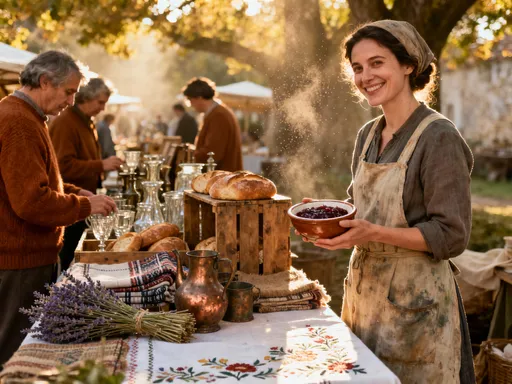
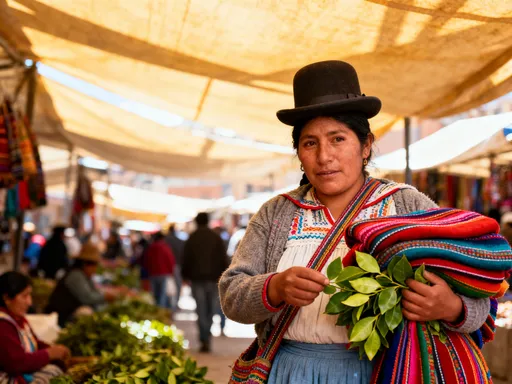
If there is a living room for Prague’s neighborhoods, it is found in its markets. These are not open-air bazaars designed for tourist consumption, but functional, vibrant spaces where food, conversation, and community intersect. Havlíčkovy Market in the heart of Vinohrady is a prime example. Open daily, it functions as both a grocery source and a social hub. Locals arrive with reusable bags, moving from stall to stall with practiced ease—selecting fresh goat cheese from a mountain farm, sampling honey harvested in South Bohemia, or bargaining gently for bundles of wild garlic in spring.
What sets these markets apart is their seasonal rhythm. Unlike supermarkets with imported produce available year-round, Prague’s local markets reflect the natural cycle of the region. In early summer, stalls overflow with strawberries from Moravian farms. Autumn brings crates of quince, chestnuts, and heirloom apples. Vendors proudly display signs indicating the origin of their goods—often just a few hours’ drive from the city. This transparency builds trust, and customers return not just for quality, but for the relationships they’ve built over time. A woman selling handmade sausages might remember a customer’s preference for extra garlic; a flower vendor might set aside a bunch of peonies for a regular on Mother’s Day.
Weekends bring an even richer atmosphere, especially at Náplavka Market along the Vltava River. Open from Saturday morning to Sunday afternoon, this riverside market transforms a quiet embankment into a lively gathering place. Organic farmers, artisan bakers, and craft brewers set up under canvas tents, offering everything from sourdough rye to small-batch plum brandy. But the real value lies not in the products alone, but in the interactions they spark. Over a cup of freshly pressed apple juice, a traveler might learn about a family-run smokehouse in Central Bohemia, or be invited to a pop-up dinner in a repurposed factory space. These connections—spontaneous, unscripted, and deeply human—are the hidden treasures of slow travel.
For visitors, the lesson is simple: come early, come curious, and come ready to engage. Rather than rushing through with a camera, take time to ask questions. Learn a few Czech phrases—‘Dobrý den’ (good day), ‘Kolik stojí?’ (how much?), ‘Děkuji’ (thank you)—and watch how smiles widen in response. These small gestures open doors that no guidebook can provide. The market is not just a place to shop; it is a window into how Prague lives, eats, and connects—one conversation at a time.
Independent Shops and Artisan Streets: Slow Retail in Prague
In an age of global brands and fast fashion, Prague’s independent shops offer a refreshing counterpoint. Scattered across districts like Holešovice and Lesser Town, these small businesses thrive on craftsmanship, individuality, and a deep respect for tradition. Streets such as Tržiště and Haštalská have become quiet sanctuaries for ‘slow retail’—a movement that prioritizes quality over quantity, storytelling over sales volume, and human connection over transaction speed.
One such shop, tucked between a dry cleaner and a pharmacy in Vinohrady, specializes in hand-bound journals. The owner, a former librarian, learned bookbinding as a hobby and now crafts each notebook with Japanese paper, linen thread, and leather corners. Customers are encouraged to touch the materials, flip through samples, and even sit at a small table to test the weight of the pen on paper. There is no pressure to buy; the experience itself is part of the product. This kind of retail is not about efficiency—it’s about intention. Every item has a history, a maker, and a purpose.
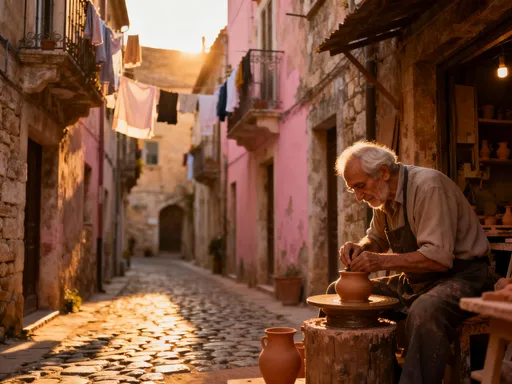
Similarly, ceramic studios in the Holešovice district showcase the revival of traditional Czech pottery techniques. Using locally sourced clay and natural glazes, artisans create tableware that is both functional and artistic. Some pieces feature folk patterns passed down through generations; others experiment with modern forms while honoring the tactile qualities of handmade work. Visitors are often welcome to watch the potter at the wheel, ask about the firing process, or even book a workshop to try their hand at shaping clay. These experiences transform shopping from a transaction into a dialogue.
Leather goods are another hallmark of Prague’s artisan economy. Small ateliers in Malá Strana craft wallets, belts, and bags using vegetable-tanned hides and hand-stitching methods that ensure durability. Unlike mass-produced accessories, these items age gracefully, developing a unique patina over time. The shopkeepers often know their customers by name, remembering their preferences and offering care tips years after a purchase. This continuity—between maker, product, and user—creates a sense of trust and value that cannot be replicated in a chain store.
These independent businesses are more than retail outlets; they are cultural keepers. They resist the homogenization of urban commerce and preserve skills that might otherwise fade. For travelers, supporting them is not just an economic choice, but an act of cultural participation. Each purchase becomes a small investment in authenticity, in craftsmanship, and in the quiet resilience of local enterprise.
Café Culture as Urban Pulse: Third Spaces in Motion
In Prague, cafés are not mere stops for coffee—they are essential threads in the city’s social fabric. Known in sociology as ‘third spaces’—neither home nor work—these venues serve as informal meeting grounds where ideas are exchanged, friendships are nurtured, and solitude is honored. From the elegant Art Nouveau interiors of Café Sladkovský to the minimalist espresso bars in Žižkov, Prague’s coffee culture reflects a deep appreciation for slowness, conversation, and ritual.
At any given hour, one can find residents lingering over a single cup, reading a novel, sketching in a notebook, or engaged in quiet discussion. Unlike the grab-and-go model common in some cities, Prague’s café patrons are expected—and encouraged—to stay. Tables are not turned quickly; service is attentive but never rushed. This unhurried pace allows for reflection and connection, creating an atmosphere where time feels expansive rather than scarce.
Café Louvre, a historic establishment near Wenceslas Square, exemplifies this tradition. Open since 1902, it has hosted writers, politicians, and intellectuals over the decades. Today, it remains a favorite among locals who come not for nostalgia, but for the consistency of its ambiance and coffee. Students spread out textbooks across marble tables, while older couples sip hot chocolate beneath gilded mirrors. The space feels lived-in, not curated—a testament to its enduring role in daily life.
Neighborhood espresso bars offer a more contemporary take on this culture. In Smíchov or Karlín, small, owner-operated shops serve single-origin beans with precision and care. The baristas often know their regulars by name and remember their usual orders. These spaces double as informal workplaces, where freelancers set up laptops, and as social hubs, where neighbors meet for afternoon coffee. The emphasis is on quality, sustainability, and human interaction—values that align closely with the slow travel philosophy.
For visitors, participating in this café culture is one of the simplest ways to experience Prague like a local. Choose a seat by the window, order a ‘káva’ or a ‘kapucíno,’ and allow yourself to simply be. Observe the rhythm of the street, listen to snippets of conversation, and let the city reveal itself in small moments. In doing so, you’re not just drinking coffee—you’re engaging in a centuries-old tradition of urban connection.
Navigating Commercial Areas Without the Rush: A Practical Guide
Exploring Prague’s commercial districts with intention requires more than a map—it demands mindfulness. The key to avoiding tourist traps and discovering authentic spaces lies in timing, observation, and respectful engagement. One of the most effective strategies is to visit markets, shops, and cafés during weekday mornings. This is when locals do their shopping, when bakeries pull fresh loaves from the oven, and when the city’s commercial life is at its most genuine.
Public transportation offers another advantage. Prague’s tram and metro system is efficient, affordable, and widely used by residents. By riding the same trams as commuters—rather than relying on tourist buses or taxis—travelers naturally find themselves in less-visited neighborhoods. Getting off at stations like Jiřího z Poděbrad or Náměstí Míru opens access to areas rich with local character, where storefronts display signs in Czech and daily life unfolds without performance.
Observation is equally important. Pay attention to foot traffic: where do locals go? Which shops have queues of residents rather than tourists? Notice delivery rhythms—bakeries receiving flour at dawn, fishmongers unpacking crates from the river, florists arranging bouquets for morning weddings. These details signal authenticity. A shop that caters primarily to tourists will often have English-only signage, inflated prices, and generic merchandise. In contrast, a local favorite may have a hand-written menu, a loyalty card system, and products that reflect regional tastes.
Another useful tip is to look for continuity. Family-run businesses often occupy the same location for decades. A butcher shop with a faded awning might serve the same clientele as it did thirty years ago. A pharmacy with antique scales and glass jars likely values tradition over trend. These establishments may not be Instagrammable, but they are deeply rooted in the community.
Finally, embrace the language. While many Czechs speak English, especially in service roles, making an effort to use basic Czech phrases shows respect and often leads to warmer interactions. A simple ‘Dobrý den’ when entering a shop, or ‘Můžu prosím?’ (May I please?) when ordering, can transform a transaction into a moment of connection. These small gestures signal that you are not just passing through, but seeking to understand.
The Balance Between Tourism and Local Life
Prague, like many historic European cities, faces the challenge of balancing tourism with the needs of its residents. In recent years, the influx of short-term rentals and international chain stores has altered the character of once-tranquil neighborhoods. In parts of Old Town and Lesser Town, it is not uncommon to find entire buildings converted into Airbnb apartments, leaving ground floors vacant or repurposed as souvenir shops. This shift can erode community cohesion, drive up living costs, and displace long-time residents.
At the same time, the rise of global brands—fast fashion outlets, international coffee chains, and standardized restaurants—threatens the uniqueness of Prague’s commercial landscape. When every street corner offers the same products and experiences, the city risks becoming a generic destination rather than a place with distinct identity. The loss is not just cultural, but economic: small businesses struggle to compete with corporate pricing and marketing power.
Yet there is hope. Travelers who choose to support local enterprises—whether a family-run bakery, an independent bookstore, or a craft brewery—contribute to a more sustainable model of tourism. Every purchase at a neighborhood market, every coffee bought from a local barista, every handmade item acquired from an artisan shop sends a message: authenticity matters. These choices help preserve the character of Prague’s districts and ensure that commerce remains rooted in community rather than commodification.
The goal is not to eliminate tourism, but to practice it with awareness. By staying in locally owned guesthouses, eating at family-run restaurants, and avoiding overcrowded attractions during peak hours, visitors can reduce their impact while deepening their experience. This form of travel is not about deprivation, but about enrichment—about trading convenience for connection, and spectacle for substance.
Why Slowing Down Transforms the Way We See Cities
In the end, slow travel is not just a method—it is a mindset. It asks us to move with curiosity rather than urgency, to listen more than we speak, and to value presence over productivity. In Prague, this approach reveals a city that is not a collection of monuments, but a living, breathing organism shaped by daily rituals, personal stories, and quiet acts of care.
When we slow down, we begin to notice what we might otherwise miss: the elderly man who waters flowers on his balcony every evening, the schoolchildren laughing as they buy ice cream after class, the scent of roasted coffee drifting from an open doorway. These moments are not dramatic, but they are real. They remind us that cities are not just destinations—they are homes.
Moreover, slowing down fosters empathy. By engaging with local life on its own terms, we move beyond the role of observer and become participants. We learn that a market is not just a photo opportunity, but a place of livelihood. We understand that a craftsman’s hands tell a story of dedication. We realize that a café is not just a backdrop, but a sanctuary.
For the traveler, especially one seeking meaning and connection, this shift is profound. It transforms travel from a checklist into a conversation—one that unfolds over days, across languages, and through shared humanity. Prague, with its layered history and resilient local culture, offers the perfect setting for this kind of journey.
So the next time you visit a city, resist the urge to rush. Put down the map. Step into a neighborhood shop. Order a coffee and stay awhile. Let the rhythm of daily life guide you. Because the true magic of travel is not in seeing more—it’s in seeing deeper. And in Prague’s hidden corners, that depth is waiting, quiet and alive, for those willing to look.