You Won’t Believe What I Saw at Yellowstone
Yellowstone National Park isn’t just America’s first national park—it’s a living masterpiece of nature. From steaming geysers to wild bison roaming free, every mile tells a story. I’ve been there twice, and each visit felt like stepping into another world. The scent of pine in the air, the distant rumble of a thermal feature, the sudden silhouette of an elk against the dawn—it all combines into something greater than scenery. This is a place where Earth’s raw power meets profound tranquility. For families, couples, and solo travelers alike, Yellowstone offers not just sights, but moments that stay with you. This guide shares the real magic, the best spots, and how to truly experience its wild heart without the crowds.
The First Glimpse: Entering Yellowstone’s Wild Realm
Driving through the northern entrance at Gardiner, Montana, the transition into Yellowstone feels almost cinematic. One moment you're on a typical mountain highway; the next, the land opens into vast meadows dotted with grazing bison and pronghorn. The air shifts—cooler, crisper, carrying the faint mineral scent of geothermal activity. Towering lodgepole pines line the roads, their straight trunks rising like pillars into the sky. The distant peaks of the Absaroka Range stand snow-capped even in summer, a constant reminder of the park’s rugged grandeur.
What makes this first impression so powerful is not just the scenery, but the sense of stepping into a different rhythm of life. Vehicles slow. Conversations pause. Heads turn toward movement in the tall grass. A mother bear and cubs might amble across a distant hillside. A golden eagle soars overhead, riding thermal currents. This is not a zoo or a curated exhibit—it’s a functioning ecosystem where humans are visitors, not rulers. Arriving with intention, turning off the radio, and simply observing enhances every moment that follows.
Many visitors rush from one landmark to the next, checking boxes on a list. But those who begin with stillness—pausing at a pullout, breathing deeply, scanning the horizon—often report a deeper connection to the park. The northern entrance is particularly rich for wildlife, especially in early morning and late evening. Elk herds gather in the Lamar Valley just ahead, and bison often linger near the Yellowstone River, where willow thickets provide cover and water.
Starting your journey here sets the tone. It reminds you that Yellowstone is not just about destinations, but about presence. The park rewards those who look closely, listen carefully, and move with respect. Whether you're traveling with children, a partner, or alone, this first stretch of road offers a quiet invitation: slow down, open your senses, and let the wild begin to speak.
Geysers That Defy Belief: Witnessing Old Faithful and Beyond
No visit to Yellowstone feels complete without standing before Old Faithful. For over a century, this iconic geyser has erupted roughly every 90 minutes, shooting steaming water up to 180 feet into the air. The predictability is part of its appeal—rangers post estimated eruption times, allowing visitors to plan their arrival. But beyond the spectacle lies a deeper story, one of underground pressure, superheated water, and the rare geological conditions that make such regularity possible.
Old Faithful is part of the Upper Geyser Basin, one of the most concentrated hydrothermal areas on Earth. Within a square mile, more than 150 geysers and hundreds of hot springs bubble, hiss, and steam. While Old Faithful draws the largest crowds, walking the boardwalks reveals quieter wonders: Beehive Geyser, with its dramatic cone and unpredictable bursts; Castle Geyser, named for its mineral-built spire; and Riverside Geyser, which erupts at an angle over the Firehole River, creating a shimmering curtain of water.
Understanding the science behind these features adds depth to the experience. Rain and snowmelt seep deep into the Earth, where they are heated by the magma chamber beneath Yellowstone. Pressure builds until the superheated water flashes into steam, forcing its way to the surface in a geyser eruption. Not all thermal features erupt—many are hot springs, fumaroles, or mud pots—but each tells a story of the planet’s inner heat.
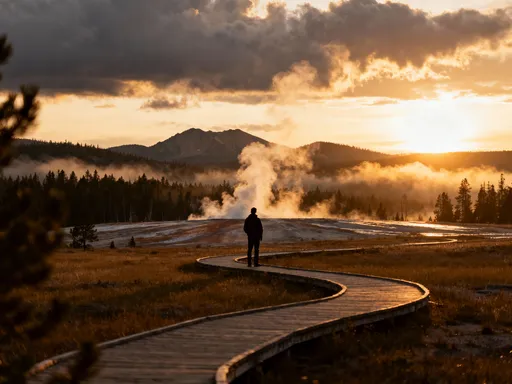
To truly appreciate Old Faithful without the crush of midday tourists, arrive early in the morning or just before sunset. The lighting at these times transforms the steam into golden veils, and the surrounding meadows glow in soft light. Park staff often give short talks before eruptions, explaining the mechanics and history. These moments—standing in the cool air, steam rising, water crashing down—create a sense of awe that lingers long after the crowd disperses.
Hidden Thermal Wonders: Exploring Less-Known Geothermal Areas
While Old Faithful captures headlines, some of Yellowstone’s most powerful thermal experiences lie off the beaten path. Norris Geyser Basin, located near the park’s northern edge, is the hottest and most dynamic of all geyser basins. Steam vents roar like jet engines, acidic pools bubble in vivid shades of orange and green, and the ground itself feels warm beneath your feet. This is raw, untamed geothermal energy—less polished, more primal than the Upper Basin.
Norris is divided into two main areas: the Porcelain Basin and the Back Basin. The Porcelain Basin lives up to its name—its bleached-white terrain, sculpted by acid and heat, looks almost alien. Eruptions here are unpredictable. Steamboat Geyser, the world’s tallest active geyser, can blast water over 300 feet, though its schedule is irregular. Standing near its crater, you feel the power waiting beneath.
The Back Basin offers a more forested, intimate experience. Trails loop past quiet hot springs, bubbling mud pots, and fumaroles that release sharp, sulfuric scents. Wildlife thrives here too—songbirds nest in the pines, and deer often cross the boardwalks. The contrast between life and geological force is striking. These areas remind visitors that Yellowstone sits atop a supervolcano, a living system that continues to shape the land.
Another lesser-known gem is the Mud Volcano area, east of Yellowstone Lake. Here, acidic mud churns in thick, bubbling pools. Dragon’s Mouth Spring gurgles and hisses like a living beast, its steam escaping through rock crevices. The nearby Sulphur Caldron is intensely acidic—so much so that it can dissolve metal—and its bright yellow rim is a warning to stay back. Trails here are shorter and less crowded, making them ideal for families or those seeking a quieter experience.
Safety is paramount in all thermal areas. Boardwalks and railings exist for good reason—just one misstep can result in severe burns or worse. The ground in many places is thin and fragile, with boiling water just inches below the surface. Parents should keep children close, and all visitors should stay on designated paths. But for those who respect the boundaries, these hidden basins offer some of the park’s most unforgettable moments.
Wildlife in Motion: Where and When to See Yellowstone’s Iconic Animals
Yellowstone is one of the last places in the lower 48 states where you can see large mammals in their natural habitats. Bison, elk, moose, pronghorn, black bears, grizzly bears, wolves, and coyotes all call the park home. But spotting them requires more than luck—it demands timing, patience, and knowledge of their behaviors.
The Lamar Valley, often called “America’s Serengeti,” is the premier destination for wildlife viewing. At dawn, the valley comes alive. Bison herds move through the grasslands, their breath visible in the cold air. Wolves may be seen on distant ridgelines, especially in winter when snow makes tracking easier. Grizzly bears emerge in spring to forage for winter-killed carcasses and fresh vegetation. Early summer brings newborn elk and bison calves, wobbling on unsteady legs.
Hayden Valley, near Yellowstone Lake, is another hotspot. Located along the Yellowstone River, it offers open terrain where animals gather to drink and graze. It’s not uncommon to see bison crossing the road here, bringing traffic to a standstill—a phenomenon known as a “bison jam.” While frustrating for some, these moments are cherished by others, a reminder that in Yellowstone, animals have the right of way.
The best times for wildlife viewing are dawn and dusk, when animals are most active. Midday heat drives many species into shade, reducing visibility. Autumn brings the elk rut, when bull elk bugle to attract mates—a haunting, unforgettable sound that echoes across meadows. Spring offers bear sightings as they emerge from hibernation, though visitors must remain especially cautious and carry bear spray.
Ethical wildlife photography is essential. Zoom lenses allow close-ups without disturbing animals. Approaching within 25 yards of most wildlife—or 100 yards of bears and wolves—is prohibited and dangerous. Feeding animals is illegal and harmful. The goal is not to get the perfect photo, but to observe without intrusion. When done right, these encounters foster deep respect for nature’s balance.
Scenic Drives That Take Your Breath Away
Yellowstone’s Grand Loop Road, a 142-mile figure-eight, connects the park’s major attractions. But beyond its function as a transit route, it offers some of the most stunning drives in North America. Each segment reveals a different facet of the park’s beauty, from alpine passes to river valleys.
One of the most dramatic stretches is Dunraven Pass, located between Canyon Village and Tower-Roosevelt. At over 8,800 feet, it offers panoramic views of the Yellowstone River valley below. In late summer, wildflowers paint the slopes in purple and gold. On clear days, you can see for miles into the Absaroka Mountains. Pullouts along the pass provide safe spots to stop, stretch, and take photos without blocking traffic.
The descent from Dunraven into Hayden Valley is equally impressive. As you wind down the mountain, the landscape opens into a vast, grassy plain bisected by the Yellowstone River. Bison often graze near the road, and osprey dive for fish in the river’s bends. The scale of the valley—its openness, its silence—creates a sense of awe that few other places can match.
Another scenic highlight is the drive along the northern edge of Yellowstone Lake. The world’s largest high-elevation lake, it stretches for 20 miles, its deep blue waters reflecting the surrounding peaks. Storm Point Trail, accessible from a small parking area, offers a short hike with stunning lake views. In winter, the lake partially freezes, creating surreal ice formations along the shore.
For those seeking solitude, the road to the Northeast Entrance offers a quieter alternative. Less traveled than the main loop, it passes through prime wolf habitat and offers access to the Lamar Valley. Driving this route at sunrise, with mist rising off the grasslands, feels like having the park to yourself.
Regardless of which route you take, driving in Yellowstone requires patience. Wildlife crossings, road construction, and traffic jams are common. But slowing down allows for deeper observation. Rolling down the windows, listening to bird calls, or spotting a distant herd of elk through binoculars—these small moments often become the most memorable parts of the journey.
Hiking Trails for Every Level: From Boardwalks to Backcountry
While driving offers broad views, hiking allows for intimate encounters with Yellowstone’s landscapes. The park features over 900 miles of trails, ranging from easy boardwalk loops to strenuous backcountry routes. Whether you have an hour or a full day, there’s a trail that fits.
For families or those with limited mobility, the Fairy Falls Trail is an excellent choice. Starting near the Midway Geyser Basin, this 5-mile round-trip hike passes the stunning Grand Prismatic Spring—best viewed from the overlook at the halfway point—before leading to a 200-foot waterfall. The trail is well-maintained, mostly flat, and rich in scenery. The overlook for Grand Prismatic, reached by a short spur trail, offers one of the most photographed views in the park.
For those seeking elevation and sweeping vistas, Mount Washburn is a classic. The Chittenden Road leads close to the summit, but the hike—about 6.2 miles round-trip—offers a rewarding challenge. At 10,243 feet, the summit provides 360-degree views of the park. On clear days, you can see Yellowstone Lake, the Tetons in the distance, and the rolling hills of the northern range. Rangers often staff the summit in summer, offering insights into the park’s ecology and geology.
Another memorable hike is Uncle Tom’s Trail, near the Grand Canyon of the Yellowstone. This steep descent involves over 300 metal steps into the canyon, leading to a viewing platform near the base of Lower Falls. The roar of the waterfall, the spray on your face, the sheer rock walls—it’s an immersive experience. While not for those with vertigo, it offers one of the most dramatic perspectives in the park.
Backcountry trails, such as those leading to Shoshone Lake or the Thorofare region, require permits and advanced planning. These routes offer solitude and the chance to see wildlife undisturbed. However, they also demand preparation—bear-resistant food storage, navigation skills, and awareness of weather changes. The park’s website provides detailed trail information, including current conditions and closures.
Regardless of trail choice, safety is key. Hikers should carry bear spray, wear layers, and bring plenty of water. Weather in Yellowstone can shift rapidly—snow is possible even in July at higher elevations. Staying informed and prepared ensures that every hike, whether short or long, is a positive experience.
Planning Smart: Seasons, Timing, and Avoiding the Crowds
The difference between a stressful visit and a magical one often comes down to planning. Yellowstone welcomes over 4 million visitors annually, with peak crowds in July and August. While summer offers the most accessibility—open roads, full services—it also brings traffic, full campgrounds, and long lines.
For a more peaceful experience, consider visiting in the shoulder seasons. Late May to early June offers green landscapes, blooming wildflowers, and fewer people. Roads are open, wildlife is active, and spring runoff makes waterfalls especially powerful. Similarly, September and early October provide crisp air, golden aspen trees, and migrating elk. By late October, most services begin to close, but the park remains open to limited access.
Winter transforms Yellowstone into a snow-covered wonderland. The park is accessible only by snowmobile, snowcoach, or guided tour, but the experience is unparalleled. Geysers erupt against a backdrop of white, bison breathe clouds of steam, and wolves are easier to spot against the snow. Old Faithful Snow Lodge remains open, offering cozy accommodations and guided snowshoe walks.
Lodging options vary. In-park lodges like Old Faithful Inn and Lake Yellowstone Hotel offer historic charm and convenience but require reservations up to 13 months in advance. Campgrounds, both reservable and first-come-first-served, fill quickly in summer. Staying outside the park in gateway towns like West Yellowstone or Gardiner provides more flexibility, though it means longer drives into the park each day.
Creating a flexible itinerary is wise. Instead of packing every day with destinations, allow time for spontaneity—stopping for a herd of bison, lingering at a viewpoint, or taking an unplanned short hike. Using the National Park Service app or a physical map helps track your location and nearby points of interest. Checking the park’s website for road closures, bear activity, and geyser predictions ensures a smoother trip.
Finally, practicing Leave No Trace principles preserves the park for future generations. Pack out all trash, stay on trails, respect wildlife, and minimize noise. These small actions, multiplied by millions of visitors, make a lasting difference.
Why Yellowstone Stays With You Long After You Leave
More than a collection of geysers, canyons, and wildlife, Yellowstone is a place that touches something deep within. It reminds us of nature’s power, its beauty, and its resilience. The steam rising from a geyser, the bugle of an elk at dusk, the sight of a bison silhouetted against the sky—these moments linger in memory, resurfacing in quiet times.
For many visitors, especially women in the 30–55 age range who often plan family trips and seek meaningful experiences, Yellowstone offers more than scenery. It offers connection—to nature, to loved ones, and to a sense of wonder that can fade in daily life. Walking a trail with children, sharing a sunrise with a spouse, or simply sitting in stillness by a lake—these are the moments that renew the spirit.
The park’s vastness invites humility. No matter how many photos you take or how many miles you drive, you only glimpse a fraction of its complexity. That sense of mystery, of something greater than ourselves, is part of its enduring appeal.
By visiting with care, planning thoughtfully, and moving with respect, travelers do more than see Yellowstone—they become part of its story. And in return, the park leaves its mark: a quiet voice that whispers, long after you’ve left, to return, to protect, and to wonder.